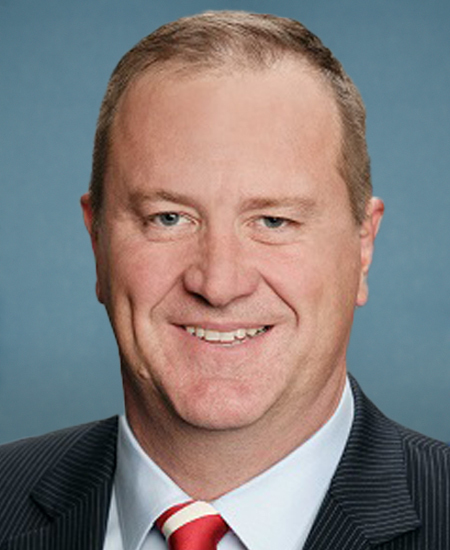
Eric Schmitt
Republican · MO· In the Senate since 2023 (3 yrs)
A mix of independence and big money.
Why this grade
Every score is built from facts you can check: who funds them and how they vote. Here's what drove it.
16.8% of their money comes from small donors; 11.5% comes from PACs.
$1,404,000 in PAC money flows through their leadership PAC (WINNING FOR AMERICA PAC).
Of the 8 money votes they've cast, they sided with the people 0 times (0%).
Where the money comes from
$65KCareer donations from the seven industries that most often buy influence, and the biggest names in each.
Blackstone $23K · Am. Bankers Assn. $5K · Citadel $4K · Mastercard $2K · Goldman Sachs $500
Apple $12K · Microsoft $4K · Google $2K
Am. Petroleum Inst. $5K · ConocoPhillips $876
Merck $4K · Johnson & Johnson $1K
Boeing $2K
AT&T $750 · Comcast $500
CBRE $122
Source: FEC career receipts. It's all legal. That's the point.
Outside money
$9.5MSuper PACs and outside groups can spend unlimited money to get a senator elected, cash the senator doesn't control and whose donors are often hidden. This is what Citizens United unleashed.
$9.5M in outside money was spent boosting them, and $1.9M spent attacking them.
Biggest boosters
- AMERICANS FOR PROSPERITY ACTION, INC. (AFP ACTION) DBA CVA ACTION AND DBA LIBRE ACTION$5.0M
- SAVE MISSOURI VALUES$3.4M
- CRYPTO INNOVATION$339K
- GOA VICTORY FUND$209K
- SENATE CONSERVATIVES FUND$161K
Source: FEC independent expenditures (Schedule E), career totals. It runs outside the senator's own campaign, and it's all legal.
The money votes
On the Senate votes where concentrated money was on the line, here's which way they went. Sided with the money on 8 of 8.
H.R. 1 · 2025. Its largest benefits flow to corporations and top earners. A yes vote sided with the donor class.
See who voted Yea & Nay →
H.J.Res. 88 · 2025. Revoked California's EV-standards waiver. A yes vote sided with oil and legacy-auto interests against the EV transition.
See who voted Yea & Nay →
S.J.Res. 18 · 2025. Killed the CFPB cap on overdraft fees at the biggest banks. A yes vote sided with their fee income.
See who voted Yea & Nay →
S.J.Res. 28 · 2025. Killed CFPB supervision of big-tech payment apps (Apple/Google/PayPal-style). A yes vote sided with those firms.
See who voted Yea & Nay →
H.J.Res. 35 · 2025. Killed the EPA fee on oil-and-gas methane leaks. A yes vote sided with the fossil-fuel industry that would have paid it.
See who voted Yea & Nay →
H.J.Res. 109 · 2024. Killed the SEC rule making banks hold capital against customer crypto. A yes vote sided with crypto firms and banks.
See who voted Yea & Nay →
S.J.Res. 32 · 2023. Killed the CFPB rule making banks report small-business lending data (used to spot bias). A yes vote sided with the banks.
See who voted Yea & Nay →
H.J.Res. 30 · 2023. Killed the rule letting retirement plans weigh climate risk. A yes vote sided with fossil-fuel and asset-management interests.
See who voted Yea & Nay →
Source: Senate roll-call records. “With the money” means the vote favored the industry whose cash was at stake. It's not a judgment of right or wrong.
How to read the grade
- AFunded by you, not by concentrated money
- BMostly independent of concentrated money
- CA mix of independence and big money
- DLeans on concentrated money
- FHeavily reliant on concentrated money
We grade money behavior, not party. Both parties run the full range. We show the averages in the open: the typical Democrat scores 72, the typical Republican 47. The grade is mostly money (who funds them) with a light weight on how they vote. Source: FEC receipts, leadership-PAC filings, and Senate roll calls. Nothing here alleges a crime. The point is that it's all legal.